
Leaving, Changing, Returning
before and after Perry

In 2015 when my father and my cat Mac were sick and then passed away, a mother hummingbird built a nest and raised two sets of twins in it. I was privileged to witness her teaching one of her of babies to fly.
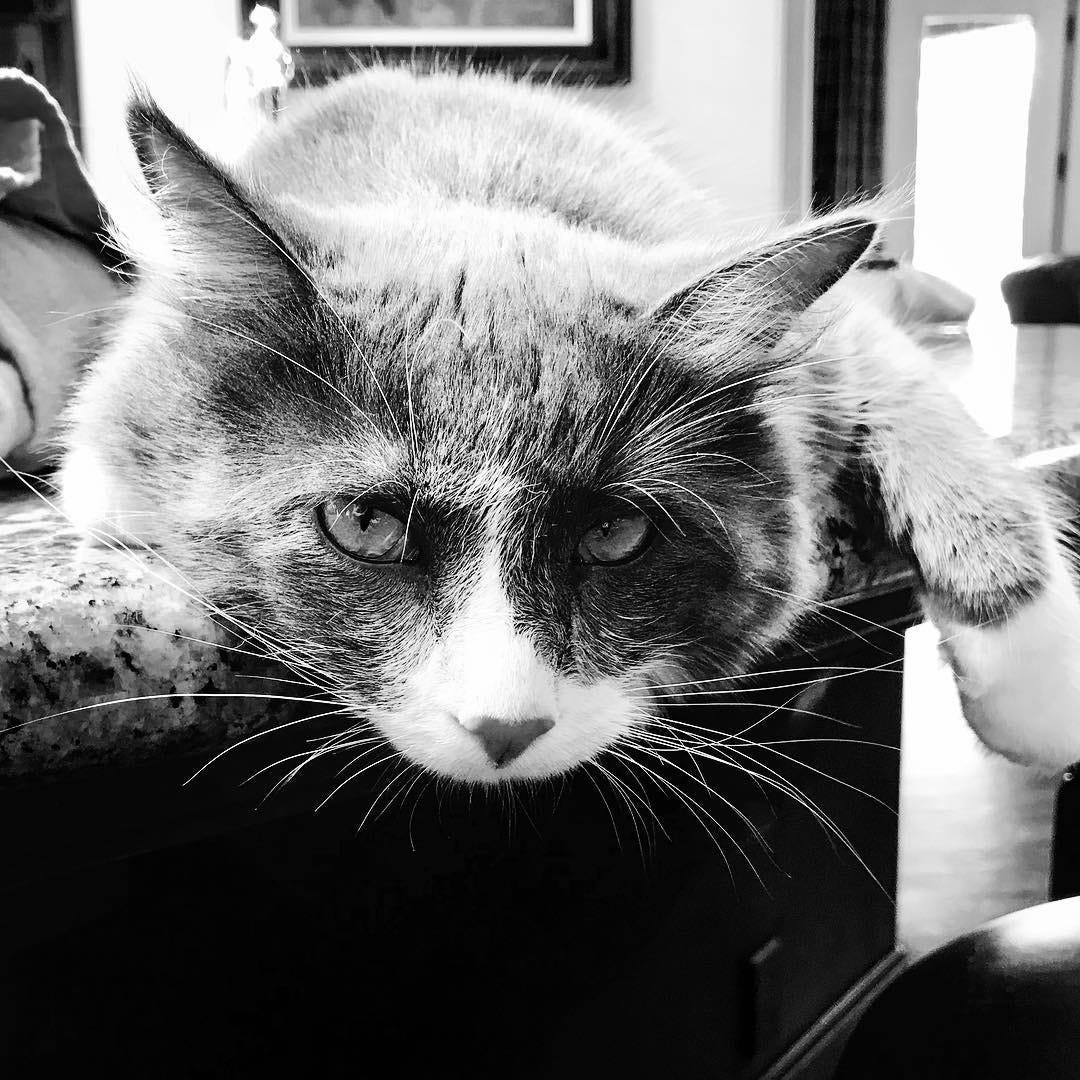
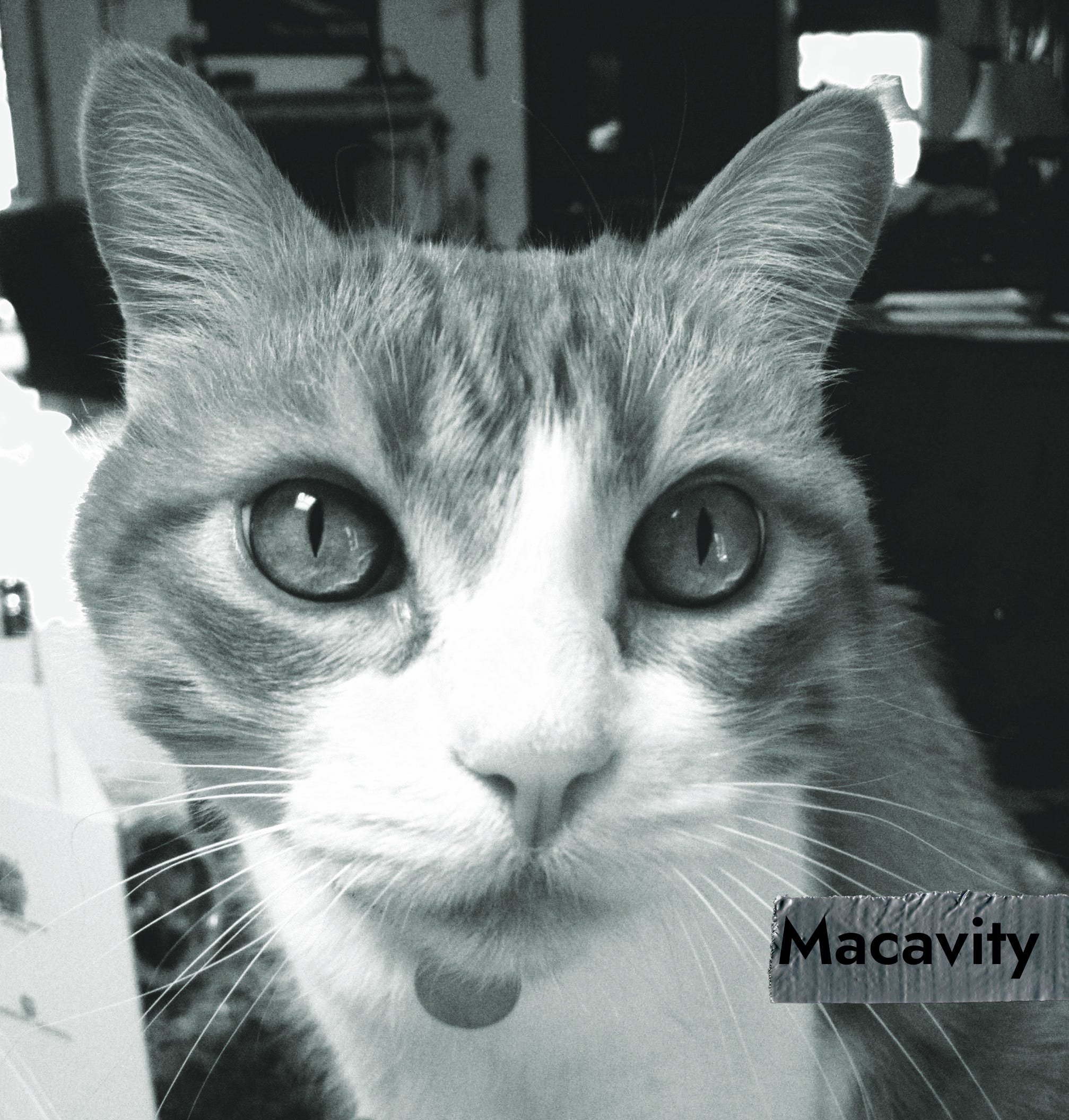
I wrote "Ordering in Four Movements" about my experiences during that time. The flash nonfiction piece was published in Phoebe and then in 2018 it was reprinted in Ginosko. It is no longer available online, so I thought I would share it here, in light of my Perry’s passing and the new hummingbird nest with patient mama right outside my front door. Of all the cats I’ve had, Perry and Mac are the only dominant male cats. Both very attached to Mama.
Ordering in Four Movements
I
Leaving
Two weeks ago, the second pair of hummingbirds left their nest. After the bold one flew off, Mama worked with the more timid fledgling for a few hours until he, too, summoned his wings and departed. The nest looks worn, as if it will eventually blow away. Wind has ruffled the weeds and webbing. There is no longer anything to keep it together.
Floating
Years ago, my gynecologist had instructions to tie my tubes. Tying means to makes a knot. Instead, she cut them free from my ovaries. After that my ovaries floated inside me, as if in the gelatinous saltwater of the sea, unmoored to any anchor. Without guidance, my ovaries grew cysts the size of coconuts and plagued me by growing and shrinking and hiding from the ultrasound technician.
That’s how I feel now. Like those unrealized ovaries—floating free and full of past possibility—I am a pod of seeds, although many are dead or dying.
II
Leaving
My oldest cat, a bossy, hypnotizing Mama’s boy, died Sunday morning. Knowing that his illnesses and the vet’s treatments would cancel each other out and make his future a chronology of suffering that would seem eternal to him, I sang him a Yiddish love song, “Tumbalalaika,” and held him bundled in a beach towel while the vet slipped poison into a tube embedded in his front leg.
I used to kiss the pads of his paws. They smelled like the feet of a human child. In the weeks that my father was sick, my cat sat on the antique elm chest and watched the first pair of baby hummingbirds outside our window.
Changing
The surgeon cut open my foot and scraped the tumor from the shell of my navicular bone. Then he filled it with a paste made from my iliac crest and from a cadaver bone. Do people register at the DMV to offer up their skeletons in case they die in accidents?
III
Leaving
When the tech came to take my swaddled cat from my arms, I gave him up because he had become just a body. I recognized the moment he was no longer with me. The tech said, “He’s gone up here” and motioned to his eyes, “but not yet here” and patted his heart. I held him for minutes more and then he was gone. He had weight and substance, even as he was dying, and then suddenly, he was light as a dry husk.
Floating
When my father was diagnosed with his final illness three months ago, my husband and I visited him. We helped him in his decision not to accept treatment and to enter hospice. Then we had to return home to our own lives and to our cats, especially the old sick one. I wasn’t there in those last days when my father hallucinated and slapped a nurse. When I called him the day before he passed, his voice was disembodied, as if it emanated from a large empty room. “Am I dying?” I didn’t know what to say, but apparently he had been asking it of everyone, as if he didn’t really understand what it meant.
Returning
After my father died, the hummingbird returned to her nest and laid two new eggs. I hovered over them from behind glass, as if I were helping their mother. But all I did was worry and take photos, like a 1950s father.
IV
Leaving
Who knows what it means to die? It’s been five days since my cat died, and now my second cat, fifteen years of good health behind her, won’t eat and has developed a bad heart. A week ago she was indistinguishable from a 2-year-old cat. Now she turns her head, leaving the food in the bowl, sleeps in odd places she’d never lain before.
My house is overrun with books and photographs and objects with stories. I pay them no mind because for a year I took care of a sick cat, for months I talked with my father every day, and now I have another cat to worry about. And two more behind her.
Returning
I don’t want any new things. I would like to spend time with what I have. I don’t want to leave them untasted, unsmelled. There isn’t enough time left. My tumor could come back. My other cats could get sick. My husband could have a heart attack. I could be walking in the park when a bomb explodes.
Ordering
Cheesy disaster movies are like lyric essays. They order the chaos. The important people, the ones close to the viewer, always survive. Then the movie ends with the world on the brink of renewing itself.
Leaving to Return
The empty nest bakes in the sun today, drying it out. Eventually it will break apart and return to the earth. I will watch for the hummingbird to appear next spring with plant fibers in her beak. Maybe my newest cat will lie on the elm chest to observe.
This is a clinic in the lyric essay. So moving. The language, though beautifully crafted, never waves for attention. The writer is present, not performing. This is profoundly ethical writing.
Wow! What a powerful piece, Luanne. No wonder is was published twice. I'm so glad you shared it here. And so sad to hear about Perry. These furry children are so loving and innocent, so "present" in our lives. To lose one is to lose part of our better selves.